Belgrade family seeks answers over police conduct in North Macedonia
“We paid the fines; the problem is how we were treated.”
A Belgrade family returning from a holiday in Greece with their two children, aged 11 and 15, wants to draw public attention in Serbia and North Macedonia to the police conduct they say they experienced after traffic offences were identified.
The family does not dispute the traffic offences or the fines imposed. They paid the fines; their complaint concerns only the way the procedure was conducted and the treatment they say they received.
“We broke the law, and we paid the fines. That is not the subject of our complaint. The problem is the unnecessary systemic and personal mistreatment that, in our view, we experienced during the penalty process.” — N. T.
More than €1,400 paid in fines
The family says they visited North Macedonia five times in 2026 and travelled through the country a total of ten times. On one occasion, they spent two nights in Prilep, and estimate that they drove between 1,600 and 1,800 kilometres in North Macedonia during the year.
According to their account, they received 14 speeding fines in total. Most concerned speeds more than 10 km/h over the limit, two concerned speeds more than 20 km/h over the limit, and one case was treated as a criminal offence. The total amount paid was MKD 87,214, or EUR 1,419.16.
According to information they say one police officer gave them, around 330,000 fines were recorded in one week, producing approximately €8.8 million in revenue. The family reports this as the officer’s statement, not as independently verified statistics.
Hours of detention without a clear explanation
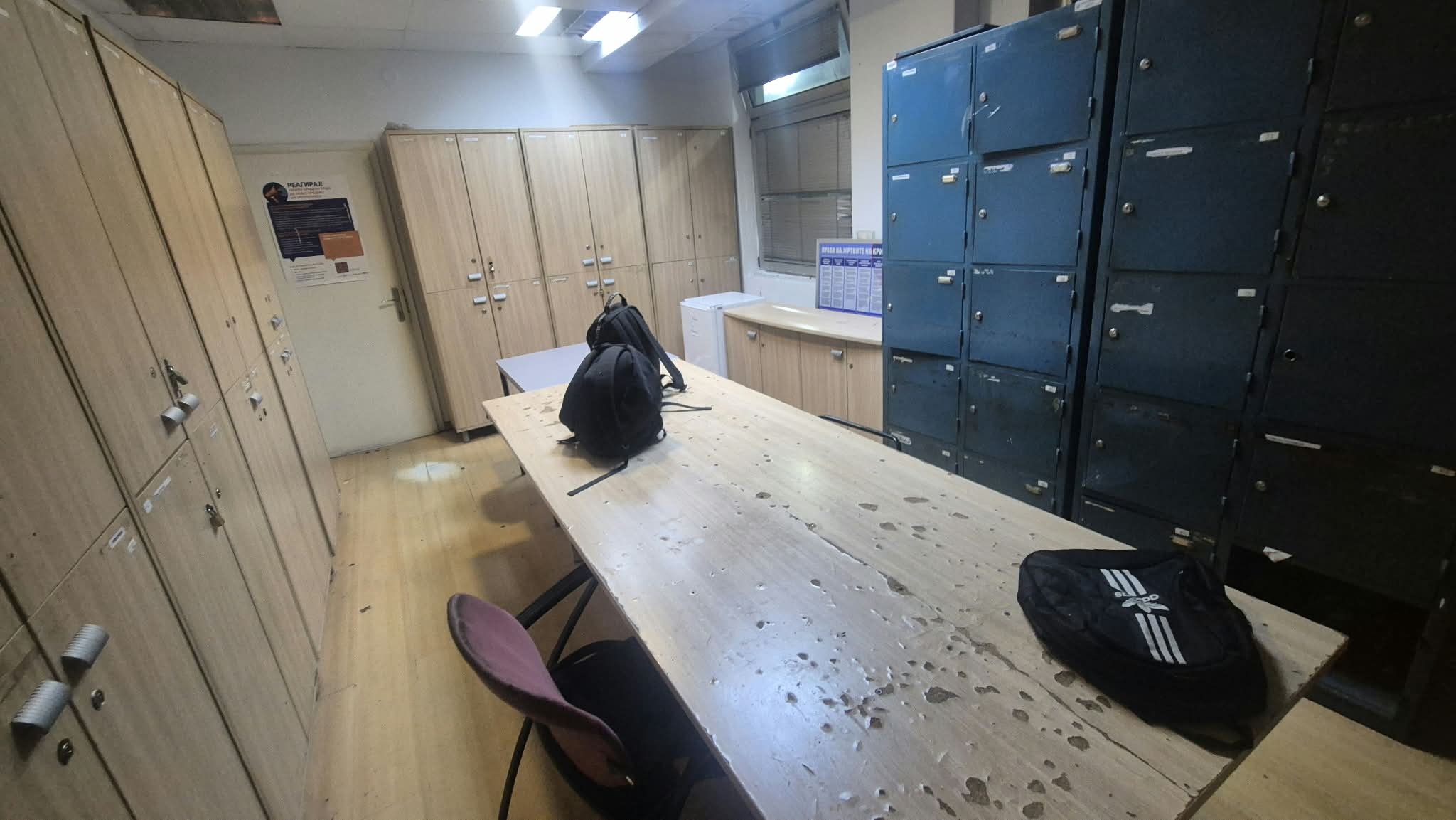
N. T. says that, after being told there was a criminal offence, he was instructed to wait in a room at the police station. He says an officer watched him, while I. L. did not know where he was. When he tried to leave to find her, the officer stopped him.
“I asked what was happening and was told I was not allowed to leave. I asked whether I was under arrest, and the officer replied that he did not know,” N. T. says.
I. L. was then taken into the room, while N. T. was instructed to remain with the children by the car. According to the family, the police took their car keys and passports, and at one point the children slept in the vehicle. The police retained the passports during the subsequent procedure and returned them the following day after it had concluded.
Search and signing documents
I. L. later told her husband that a full-body search had been ordered. According to the family, the policewoman expected to conduct the search initially said it was unnecessary, but a superior insisted that it be carried out.
The family also claims that I. L. was given a document stating that her rights had previously been read to her. They say her rights had not been read, and that she was told she would not be going anywhere unless she signed the document.
After several hours, I. L. was brought out to be transported to Negotino. The family says she was visibly distressed, shaking, and crying. She was placed in a police vehicle, while N. T. and the children were instructed to follow in their car.
The journey to Negotino
According to the family, the police vehicle travelled at approximately 140 km/h, while N. T. observed the speed limit of between 100 and 120 km/h. They say officers asked him, through I. L., to drive faster, which she refused to relay as an instruction.
During a stop at a petrol station, an officer showed N. T. photographs of their vehicle. The family says they were told the offence had occurred on 26 August 2026 at 21:45 and that they would pay €1,000. Later in Negotino, they received different information: that the offence had been recorded on 6 August 2026 at 12:30.
N. T. also says that during the stop, the officer tried to persuade him to rent accommodation through an Airbnb listing the officer recommended. He declined the offer.
Negotino and the driver’s identity
The family says that, after more than an hour on the road, they arrived at the Negotino police station at around 2 a.m. N. T. then told the officers that he, not I. L., had been driving at the time of the relevant offence. He says he was told this no longer mattered, and the information was not changed.
The family says they later learned that the driver’s identity did matter for the ban on driving in North Macedonia. They report the information that a subsequent offence could lead to imprisonment as something they were told during the procedure, not as an independent legal interpretation.
A night in a hotel and a visit to court
The family booked a hotel in Negotino. N. T. says one officer demanded proof of the reservation and told them they were “privileged” and lucky not to have been sent to prison. They spent the night at the hotel with their children, but according to their account, I. L. was not allowed to leave.
The following morning, police took them to court. There, they met a Dutch national who, to their knowledge, had committed the same offence in the same tunnel. The family says he was not permitted to spend the night in a hotel and instead spent it in a police waiting room.
“In the end, there was no trial”
The family says that no trial ultimately took place. They were allowed to pay the €1,000 fine by card. They also claim they were told they had to sign a statement waiving their right to appeal.
I. L. initially refused to sign, but the family says they were told they would not be able to leave until the document had been signed. After it was signed, their passports were returned, and they left the court.
What the family is asking for
N. T. and I. L. emphasise that they are not trying to avoid responsibility for the traffic offences. Their complaint concerns the way the police procedure was carried out.
They describe the treatment they say they experienced as unnecessary and disproportionate. They specifically point to hours of detention without a clear explanation, separation of the family, the search of I. L., conflicting information about the time of the offence, the retention of passports and keys, pressure to sign documents, and the manner in which certain police officers communicated with them.
Their aim, they say, is not to challenge traffic laws, but to highlight the need for police procedures to be conducted transparently, professionally, and with respect for the rights of the people involved.